
A Camp Fire Kid Goes to the Olympics: Alumni Story with Kris Thorsness
Attorney. Olympian. Camp Fire Kid.
Despite her future fame as the first Alaskan to win an Olympic medal, Kris had never set foot in a rowing boat before college.
Kris had no plans for athletics while attending the University of Wisconsin. She says she wasn’t particularly good at any sports she played in school, but her brother encouraged her to give rowing a try. He told her the university had a good team, and that even though Kris was shorter than a typical rower, she had a “good head for it.”
Six years later, following the 1984 Summer Olympic Games in Los Angeles, Kris returned to Anchorage with a gold medal. An excited crowd met her at the airport. Everyone from old high school friends to local politicians and luminaries came out to meet their new local hero. The Anchorage Assembly passed a resolution honoring her “hard work and determination.”
Kris calls any notion that her medal was a personal achievement a myth. She credits her success to everyone who pushed her and mentored her. And that journey, as she puts it, “started from my first time going to camp…”
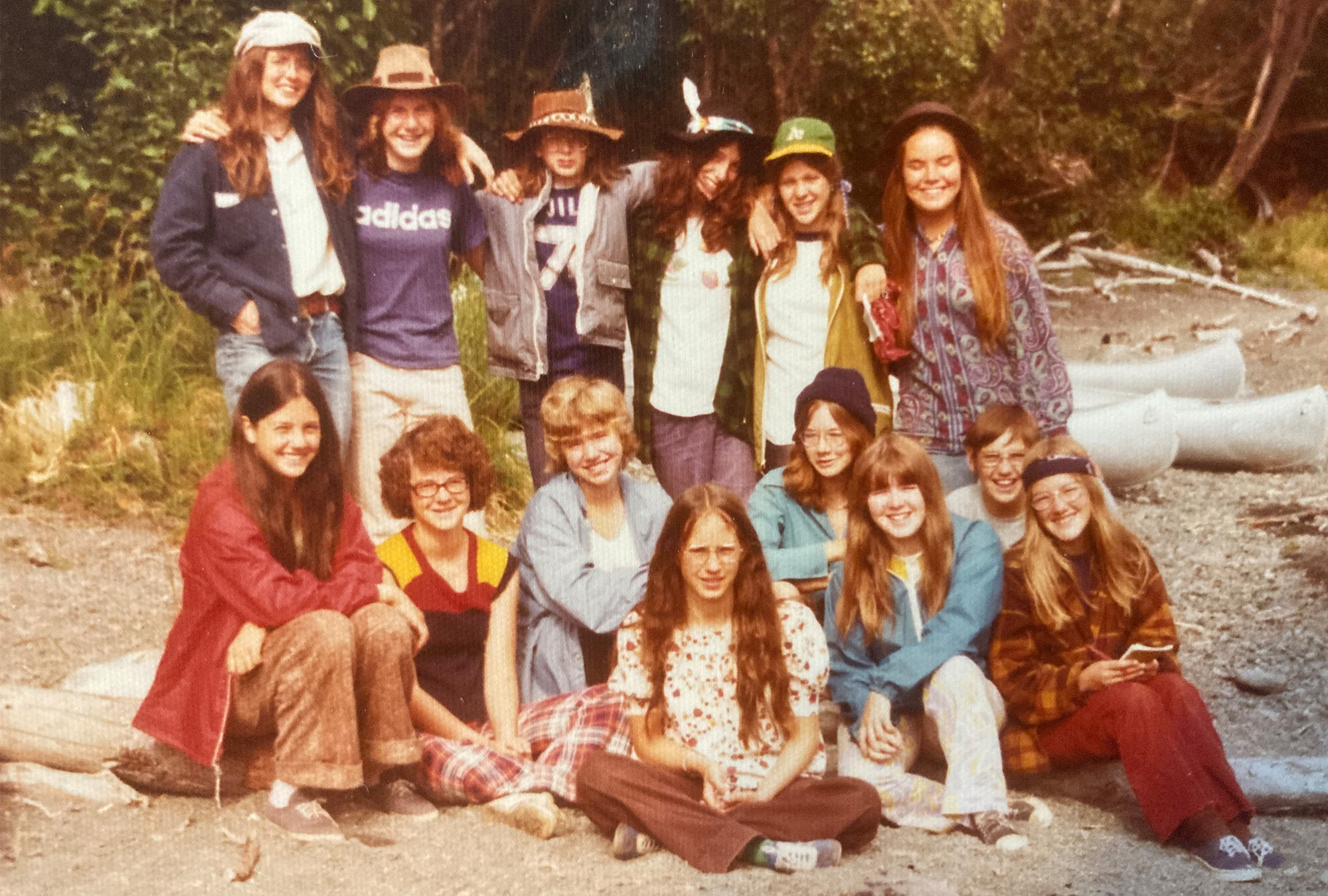
Kris Thorsness, top row and second from the left, with a group of fellow campers at Camp K in the 1970s.
Making Friends and Memories
Kris’s first visit to Camp K on Kenai Lake was in the summer after third grade, and she continued until her junior year of high school. For her last two years, she was in the Counselor in Training* program, which to this day still provides leadership and job skills training to teens. And she “absolutely loved it.”
“Going to camp changed my life in a lot of ways,” she says. “It was a real foundational, formational experience for me. Just being in the environment was so enriching and eye opening for me.”
Kris and her two older brothers grew up in a conservative family with traditional gender roles. At the time, until 1975, Camp Fire was for girls only. So, when Kris first attended in the late 1960s, she found herself in place where women were not only in charge, but where the girls were empowered with a “tremendous amount of autonomy” to plan what they did and where they went.
“We’d take three-day, two-night overnight trips each week and we planned that. We decided where we were going. We planned all of our food, all of our equipment. If we left something behind, it was on us.”
And with the physical challenges they endured together, like climbing mountain sides and swimming in that “crazy freezing cold lake,” she bonded with her fellow campers. Many of those friends she’s still in contact with today.
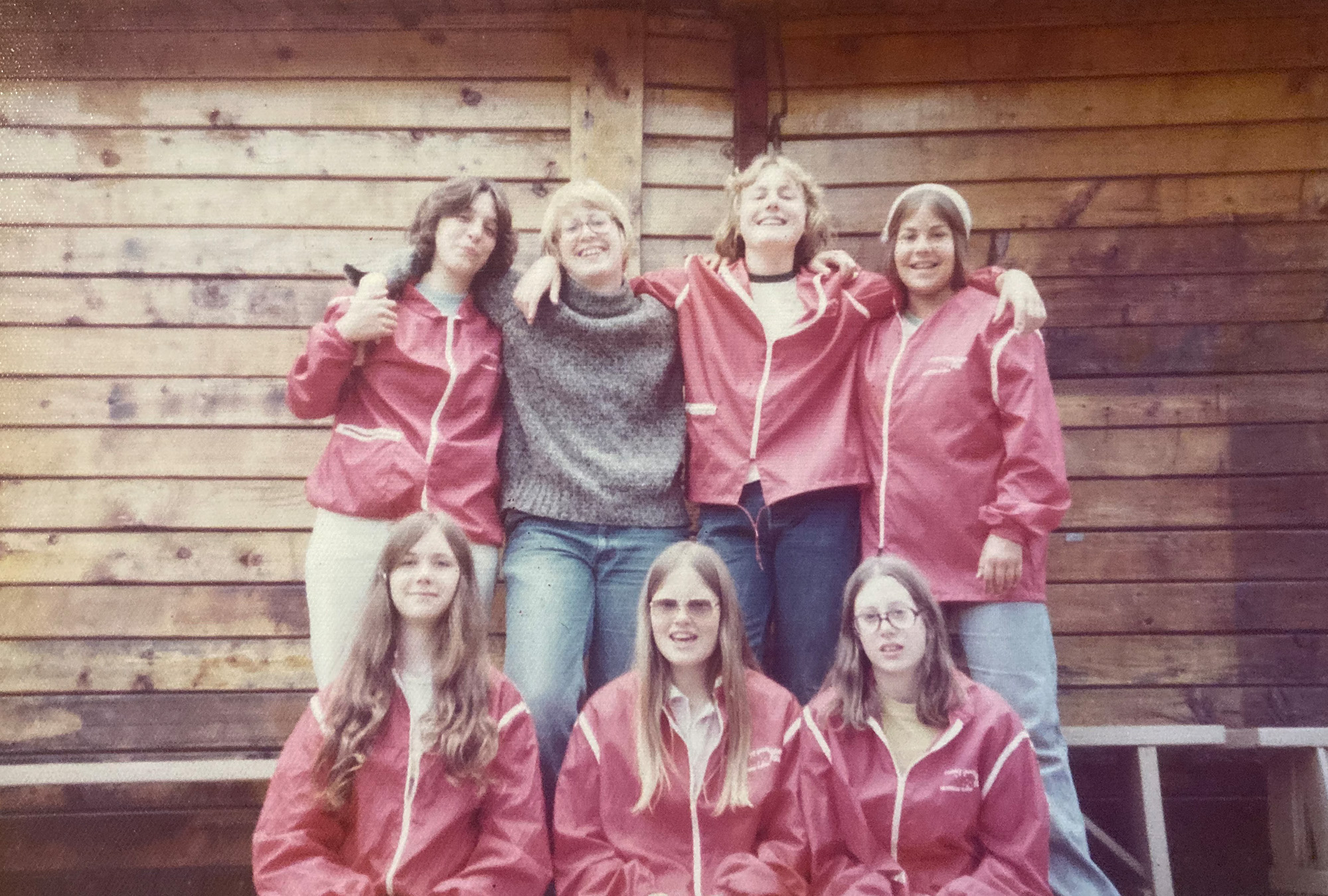
Kris Thorsness, top row and second from right, with her Counselors in Training cohort at Camp K in the 1970s.
Her Favorite Camp Experience
Kris recalls her favorite memory as the day they hiked Devil’s Pass, a 20-mile out-and-back trail with nearly 3,000 feet of elevation gain. After hours of hiking up the mountainside they crested the ridge and found themselves surrounded by dozens of Dall sheep.
“There was this ram standing up above with the big curl in the rack just looking, giving us the eyes. They kind of made room for us…and we just walked right through the middle.”
Growing up in Alaska, Kris says, can cause a kid to get jaded to those types of experiences—you’re seeing nature and wildlife all around you. “I was pretty impressed,” she says. “It was pretty amazing.”
Another memory she recalls fondly were the nightly music sessions. After each meal in the lodge, counselors would bring out their guitars and lead camps in silly songs.
“I can’t carry tune in a bucket,” Kris says, “but I love to sing. You get me in a great big group where you can’t actually hear me, and then I can just belt it out and have a great time.”
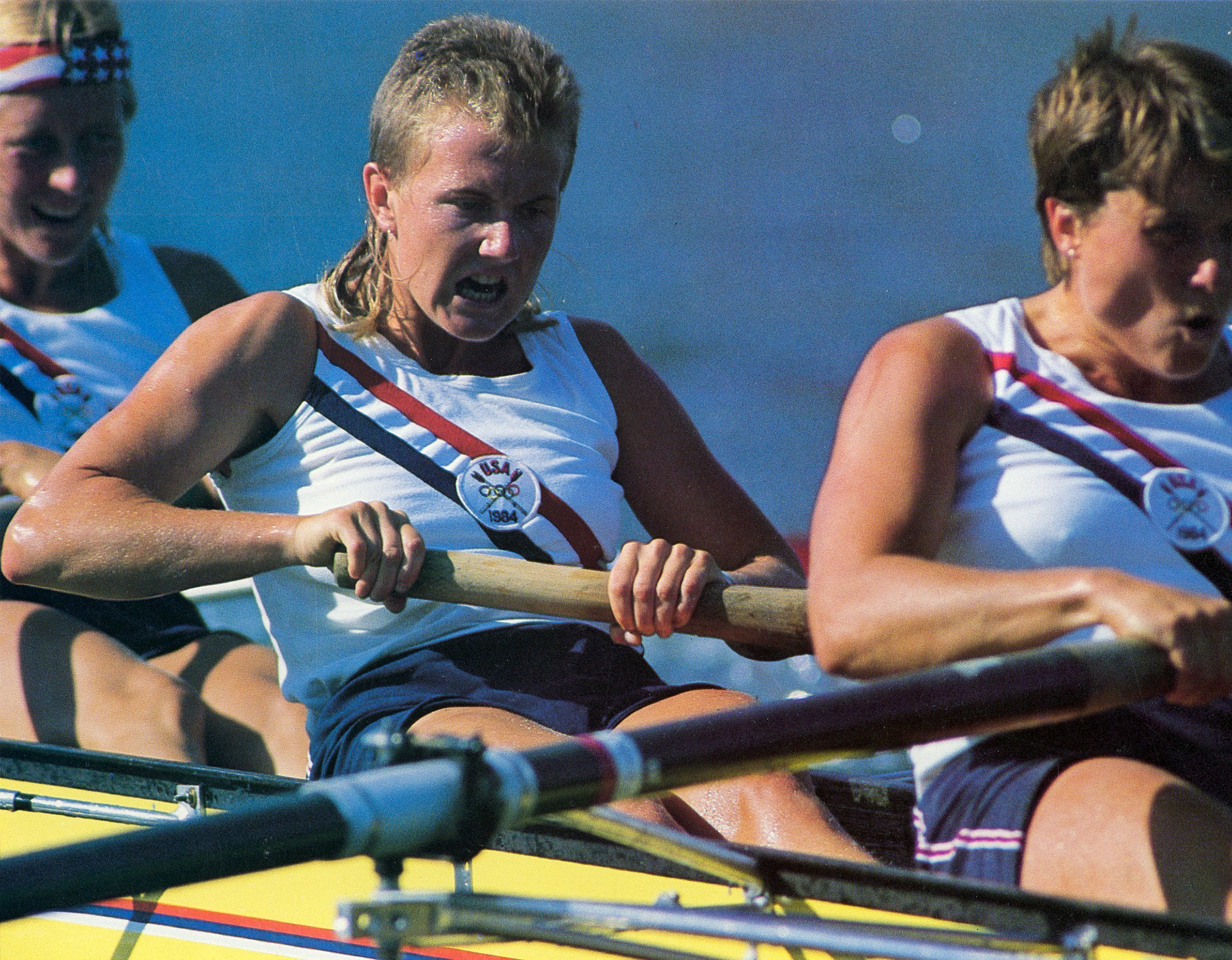
Kris Thorsness digging deep to help the U.S. Women’s Rowing Team win Gold at the 1984 Summer Olympic Games in Los Angeles.
Camp Paves the Way to the Olympics and Beyond
When Kris was growing up, there weren’t many organized team sports for girls until the 7th grade. Younger boys could play and learn together in Boy Scouts, Little League, and football. But for young girls like Kris, she says there was really only the Girl Scouts and Camp Fire Girls. She had a friend in Camp Fire, so that’s where she went.
At camp, Kris learned about goal setting, planning, teamwork, and pushing through discomfort. Lessons she held onto throughout her career as an athlete and as an attorney.
“Those are crucial skills for success in almost any endeavor, particularly professionally,” Kris says. “Learning to work with other people, and to share the work, and to take your share of the work.”
Kris believes kids need to learn that what’s important is inside themselves—their abilities, dreams, passions. And the value in pursuing your passions is more than achieving a prize.
“Even if you don’t end up with one of these shiny gold medals,” Kris says, “you will have grown and learned so much about yourself and obtained skills that will be meaningful…[It will] help you succeed in every aspect of your life. And for me, a lot of that started at Camp Fire.”
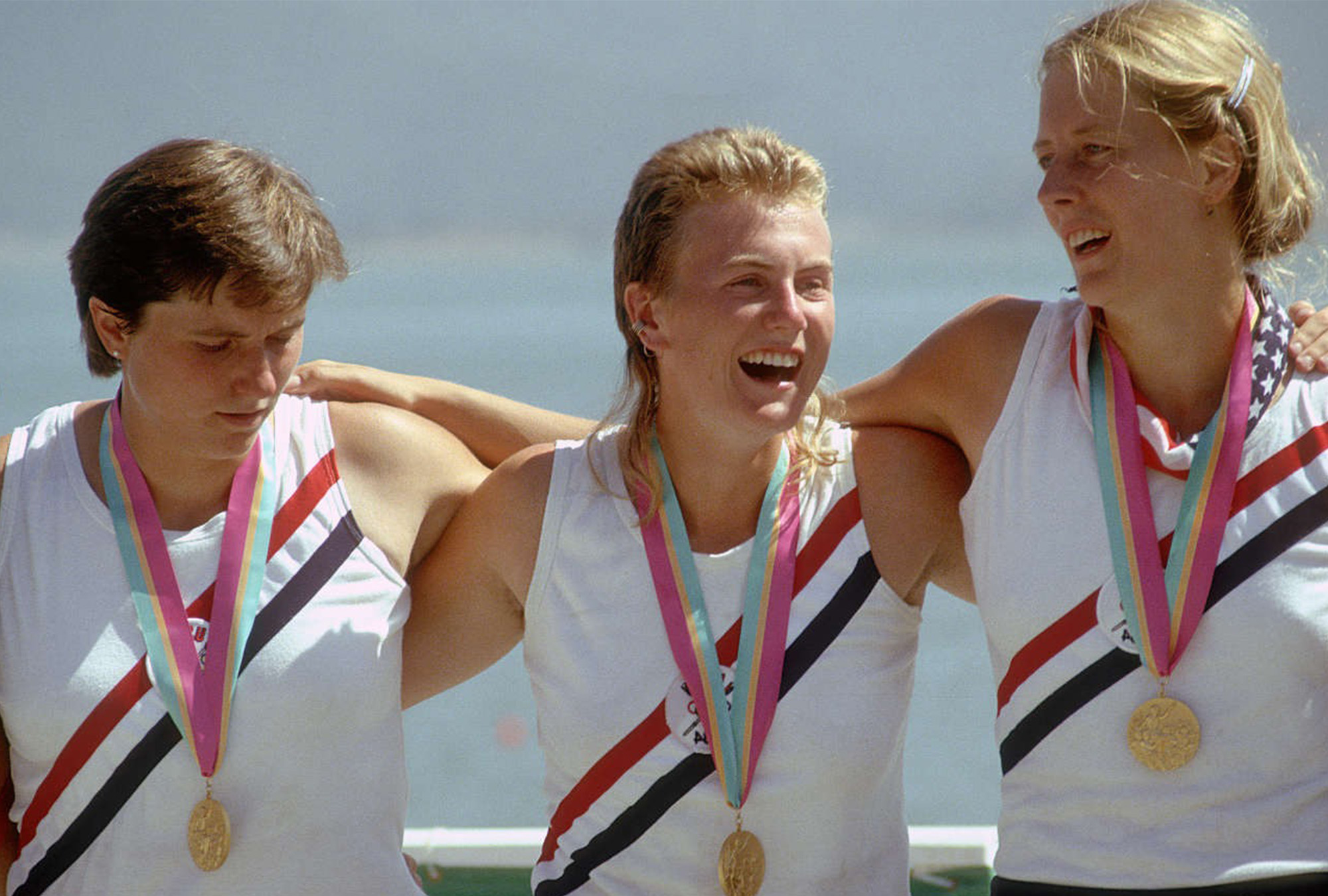
Kris Thorsness, center, celebrating her team’s gold medal win at the 1984 Summer Olympic Games in Los Angeles.
Paying it Forward
Today, Kris is a committed supporter of Camp Fire Alaska’s mission, not only as a donor but a top Facebook fan—you’ll often seen spot her commenting on our posts. And that’s all because she truly believes what Camp Fire provides is crucial in today’s environment.
“Camp Fire is so much larger now in Alaska than it was when I was growing up,” she says, “but the importance of the programming hasn’t changed, and the lessons kids learn, and the leadership skills that they develop, and the sense of self and self-worth that they develop in those programs is so important.
“For those school age kids…having that kind of supportive, nurturing, positive, self-affirming environment is so important. And I think they can’t get enough of that. Camp Fire’s programs deliver that in a big way. I mean, I’m living proof.”
We don’t know which Camp Fire kid will become the next Alaskan to win an Olympic medal, but that’s the beauty of our mission. Every child has the opportunity to find their spark. Whether they’re hiking through a stunning mountain pass, singing silly songs, or taking a dip in the cold waters of Kenai Lake, every experience at Camp Fire helps a child discover more of their potential.
Thank you, Kris, for your continued support of Camp Fire and for all you’ve done to inspire the next generation to pursue their passions.
This blog is only a small snippet of our interview with Kris. Watch the full interview on our YouTube channel to hear much more about her journey to becoming Alaska’s first Olympic medalist.
Are you a Camp Fire alumnus? We’d love to hear your story! Please visit this brief form to get started.
*Camp K’s teen leadership program is now called “Leaders in Training.” Camp Fireweed has a similar program called “Counselors in Training.”