
The Power of Afterschool Programs
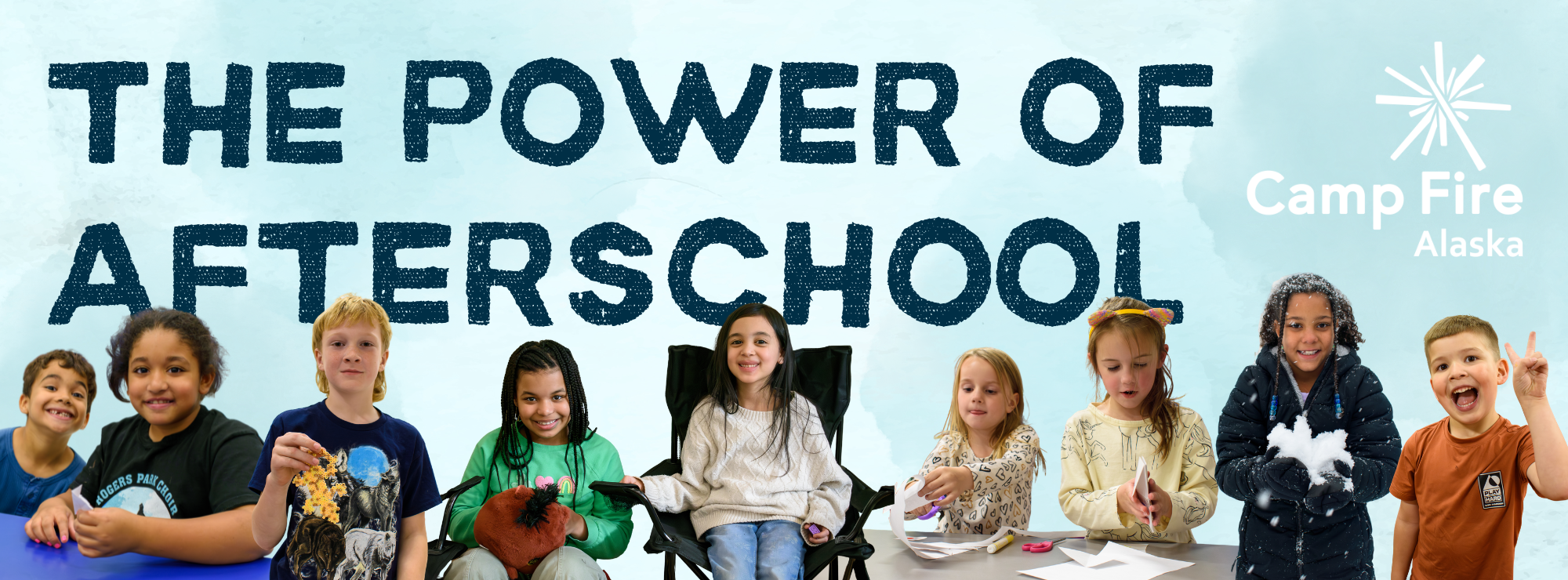
This article was originally written for and published in Raising Alaska, a special print section in the Anchorage Daily News dedicated to families, parenting, and community.
When the school bell rings, where do your kids go? For many younger children, they’re headed home with older siblings. Some are watched by extended family members, such as grandparents. Others are cared for by family friends and neighbors.
If this is describing your family, you’re not alone. Children in the care of family, friends, and neighbors is the most common type of non-parental child care in the United States.
As the cost of child care rises and more providers are closing their doors, this option makes financial sense for many families. Yet, over half of Alaskan families, higher than the national average, say they would enroll their child in an afterschool program if one were available to them.
And it’s easy to see why. Melanie Hooper, President and CEO of Camp Fire Alaska, the largest licensed child care provider in the state, says that afterschool programs provide a hands-on learning environment essential in healthy child development.
“Children are building skills in emotional regulation, problem solving, critical thinking, and communication,” she says. “And when being exposed to new interests and experiences, children become more confident and build new social connections. We see these benefits firsthand every day.”
Increased Wellbeing and Mental Health
The phrase, “iPad kid,” has been growing in popularity. Children today are growing up learning to crave the same app-based dopamine rushes that adults struggle with. Teens are averaging nearly 9 hours of media use per day, including an average hour and half on social apps like Instagram or Snapchat. Tweens (ages 8-13) average 5 and a half hours of screen media per day. For younger children, research shows that fast-paced videos or interactive games can hook them to the point of addiction. High screen use may lead to attention difficulties and social challenges.
“Given the rapid increase in technology exposure, afterschool program involvement is more essential than ever,” Hooper says. “We know that screen time and social media use is linked to increased mental health concerns and the growing loneliness epidemic this generation is experiencing.”
In Camp Fire’s licensed afterschool programs, kids have access to books, art supplies, and nutritious snacks. They can play outside or in the gym. They move and they create, building healthy habits and increasing their skills to positively interact with the people and the world around them. The Teen Leadership Program offers leadership development, resume building, and community service learning.
Protective Factors
These positive interactions with the people around them are key to healthy development and child safety. In fact, it’s what’s known as a protective factor for building resilience and stronger families. Children of all ages whose social and emotional competence are supported learn to better communicate with others and self-regulate their behavior, leading to better relationships with family and peers.
In Camp Fire’s programs, 94% of youth say there is a staff member they can go to for help with a problem. Research consistently shows that having safe, trusted supportive adults in childhood is associated with positive, long-term outcomes—including better mental health in adulthood.
Discovering Who They Are
This past spring, one of Camp Fire’s eighteen afterschool sites hosted a talent show for their monthly family night. There was a lot of what you might expect, like singing and dancing. But families also enjoyed a Chinese yoyo performance, a showcase of drawings, and a silent, silly Ninja battle. Beyond being just a hobby, many of these kids expressed the desire to continue these talents professionally one day.
Hooper explains that Camp Fire is more than child care: “It’s an opportunity for youth to explore and discover who they are. Without screens, they are more likely to seek out other creative forms of play, discover new interests, and ultimately discover and develop their identity. They find the best within themselves in a fun, safe learning environment.”
Financial Resources Available to You
Cost is the number one barrier to enrolling a child in afterschool programs. Camp Fire offers scholarships, based on each individual family’s circumstances, for all of their school year and summer programs. Additionally, as a licensed child care provider, Camp Fire’s afterschool program, and some of its summer programming, is eligible for Child Care Assistance, further reducing the financial burden.
“At Camp Fire, we believe cost should never be a barrier for a child to attend an afterschool or summer camp program,” Hooper says. “And we have an incredible network of supporters who donate to make sure this is possible. We are grateful to have a community so committed to investing in our future generation.”