
Keeping Kids Safe: Camp Fire’s Youth Safety Curriculum
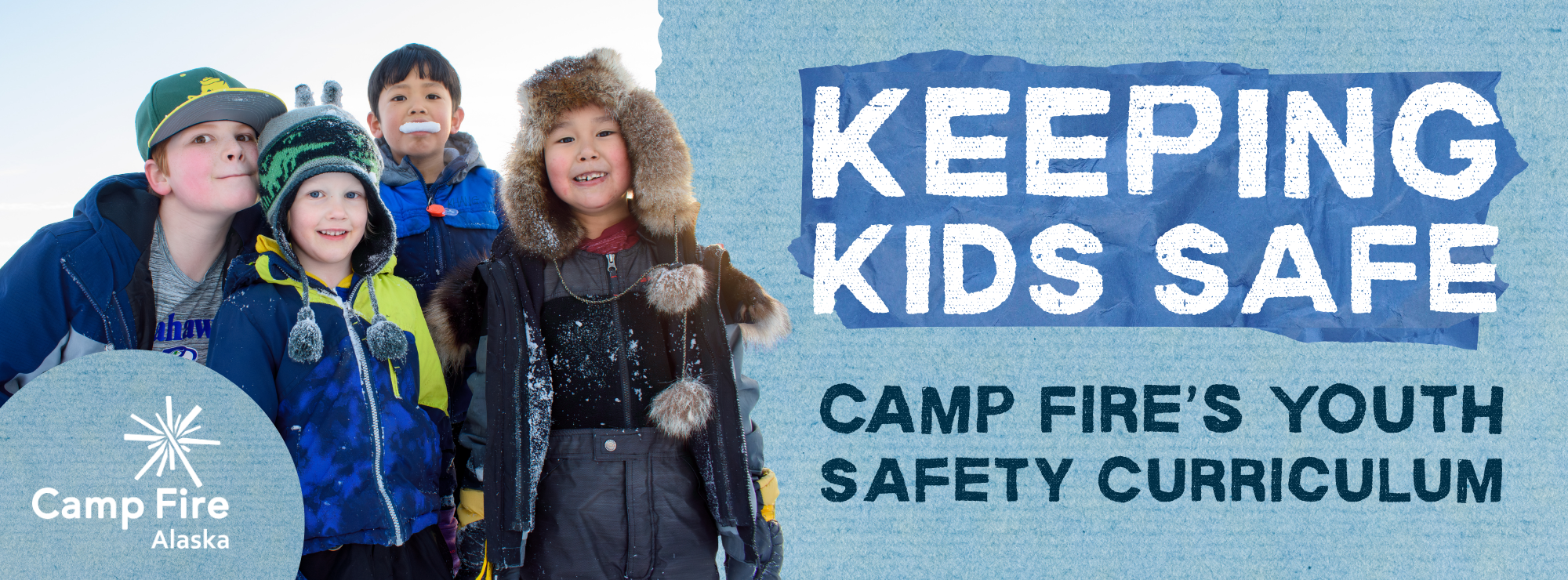
At Camp Fire Alaska, the safety and well-being of children is our highest priority. As part of that commitment, we recently began a youth safety curriculum for our afterschool programs.
Our site directors were trained through Second Step to guide discussions and activities to help kids learn about healthy boundaries, body safety, identifying trusted adults, and what to do if they ever feel uncomfortable or unsafe.
The lessons are age-appropriate, with different material for young and older age groups, and presented in a positive, empowering way. Our goal is to give kids both the tools and language to feel confidence confident speaking up and seeking help when they need it.
What Kids Are Learning
The lessons begin with rules for everyday safety and gradually add in more about body safety, personal boundaries, and how to speak up when something feels wrong. Below is a brief overview of each lesson for each age group.
LESSON 1: KEEPING YOURSELF SAFE
Grades K–3
Kids learn simple strategies for staying safe using the Ways to Stay Safe and the Never‑Never Rules.
Grades 4–5
Kids review the Ways to Stay Safe, learn how to stay safe when they are alone, and practice what to do in an emergency.
LESSON 2: THE ALWAYS ASK FIRST RULE
Grades K–3
Kids learn an important safety rule: Always ask a parent or the person in charge before doing something, going somewhere, or accepting something from someone. They practice identifying trusted adults and asking assertively for permission.
Grades 4–5
Kids review the Always Ask First Rule and learn what to do if no trusted adult is nearby to ask.
LESSON 3: SAFE AND UNSAFE TOUCHES
Grades K–3
Kids learn the difference between safe, unsafe, and unwanted touches, and practice using assertiveness skills to refuse touches that are unsafe or unwanted.
Grades 4–5
Kids identify unsafe and unwanted touches and learn that it is never okay for someone to touch them in a way that makes them uncomfortable. They also practice recognizing body warning signs and learn how to refuse and report unsafe or unwanted touch.
LESSON 4: THE PRIVATE BODY PARTS RULE
Grades K–3
Kids learn an important rule to help protect them from sexual abuse, called the Touching Rule: a bigger person should never touch their private body parts except to keep them healthy. Kids practice how to refuse and report when someone breaks this rule and learn that it is never their fault.
Grades 4–5
Kids learn the Private Body Parts Rule and practice using the Ways to Stay Safe if someone breaks it.
LESSON 5: PRACTICING STAYING SAFE
Grades K–3
Kids practice using the Ways to Stay Safe if someone breaks the Touching Rule. They also learn the Never Keep Secrets Rule—that it’s never okay to keep secrets about touching—and that they should keep telling trusted adults until someone helps.
Grades 4–5
Kids learn that breaking the Private Body Parts Rule is wrong and that it is never their fault. They also discuss how people who break the rule may try to keep it a secret and practice continuing to report until an adult helps.
LESSON 6: REVIEWING SAFETY SKILLS
Grades K–3
Kids watch a video story about a child who uses the safety skills and concepts learned in the program.
Grades 4–5
Kids review key skills by participating in an interactive online story or watching a video story with the class.
Talking With Your Child About Safety
You can also take steps to strengthen communication at home with your children. Like the safety lessons, conversations don’t need to be heavy or based in fear. In fact, simple, ongoing conversations are often the most effective approach.
You might ask your child:
“How are things going at Camp Fire / school / practice?”
“Is there anything that’s made you feel uncomfortable?”
“Who are the safe adults you can talk to if you need help?”
And remind them:
Their body belongs to them.
They never have to keep secrets that make them feel confused or uncomfortable.
They can always come to you with questions or concerns
When these conversations happen regularly, children are more likely to speak up and seek support if and when they need it.
Our Shared Commitment to Prevention
Preventing harm is not only about responding to problems. It’s about building strong relationships, teaching and reinforcing boundaries, and creating communities where young people can thrive.
At Camp Fire, our commitment to youth safety is ongoing and always at the forefront of what we do. Learn more about how Camp Fire prioritizes youth safety and well-being within our policies and procedures in our previous blog.
More information about this curriculum can be found at Second Step.